ICML2025 Video-Related Research
Visits:
In this post, I’ll quickly summarize the video generation related research that I found interesting in ICML2025.
XAttention: Block Sparse Attention with Antidiagonal Scoring
Problem
Existing block-sparse methods have struggled to deliver on their full potential of orginal models, often grappling with a trade-off between accuracy and efficiency, where the efficiency is also limited by importance score searching. Can we design a block-sparse attention mechanism that dramatically accelerates longcontext Transformers without compromising accuracy, truly unlocking their potential for real-world applications?
Proposed Method
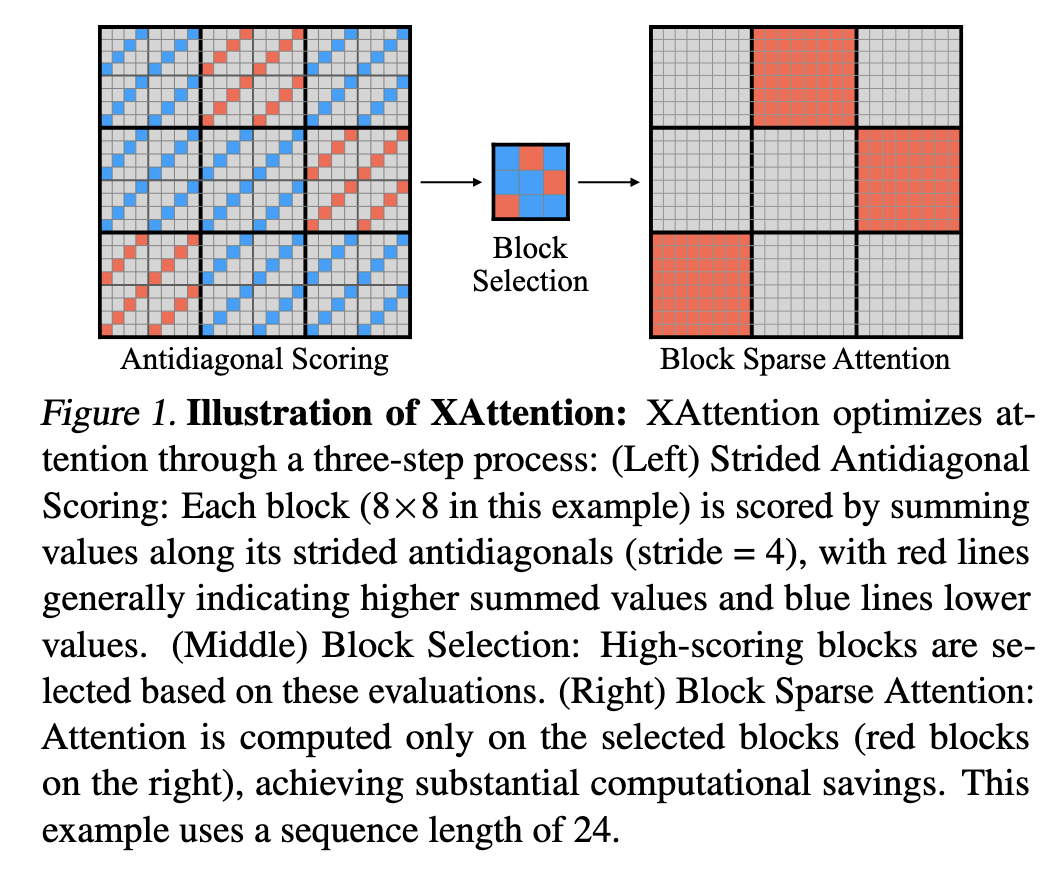
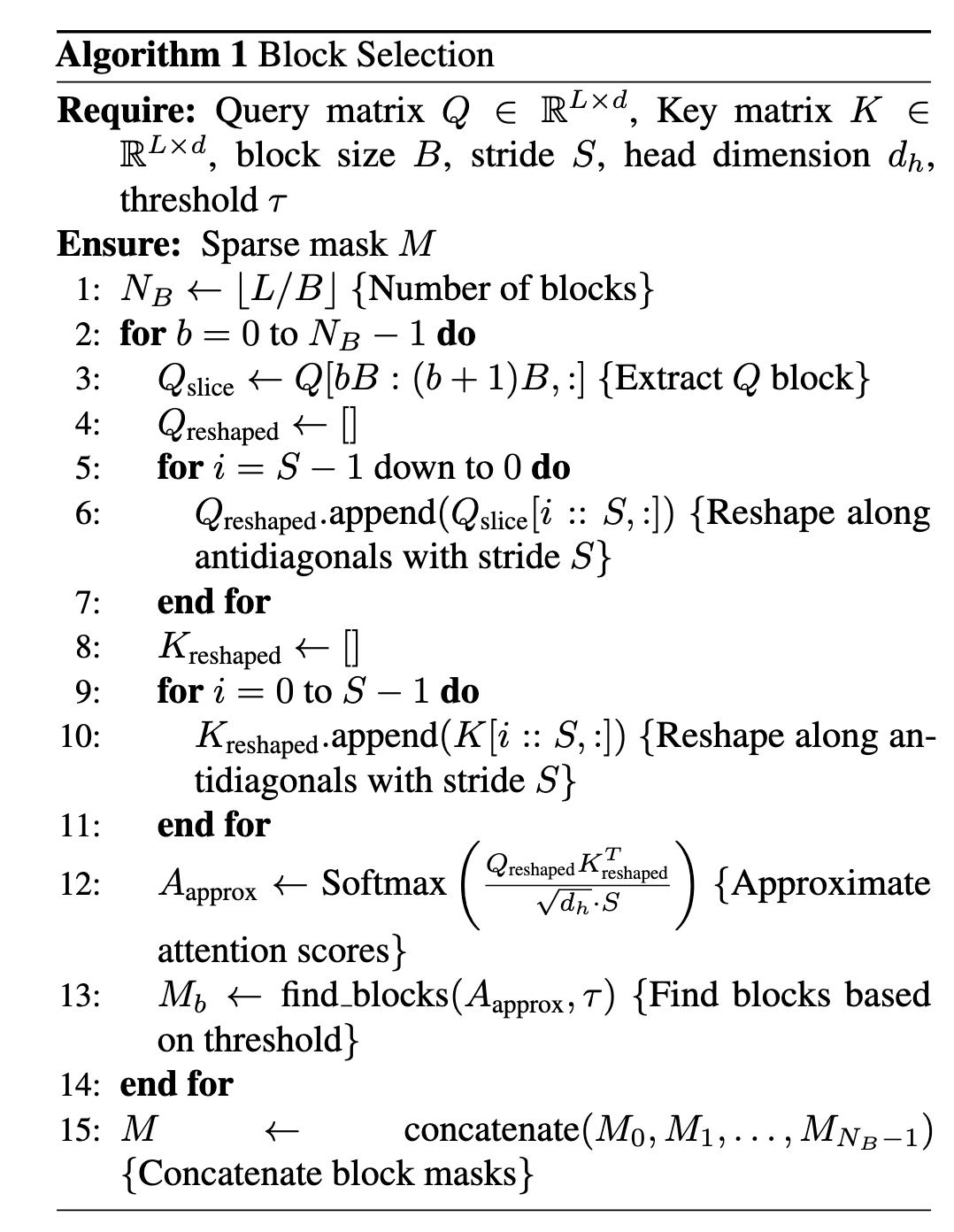
The authors propose a new block-sparse attention mechanism, XAttention, that leverages antidiagonal scoring to achieve high accuracy while maintaining efficiency by their empirical observations though they didn’t mention a lot of how they find this observation. Other than the block selection by a threshold, the authors also propose a dynamic threshold prediction method using dynamic programming to set the threshold for each block but which is not mandatory.
Experiments & Results
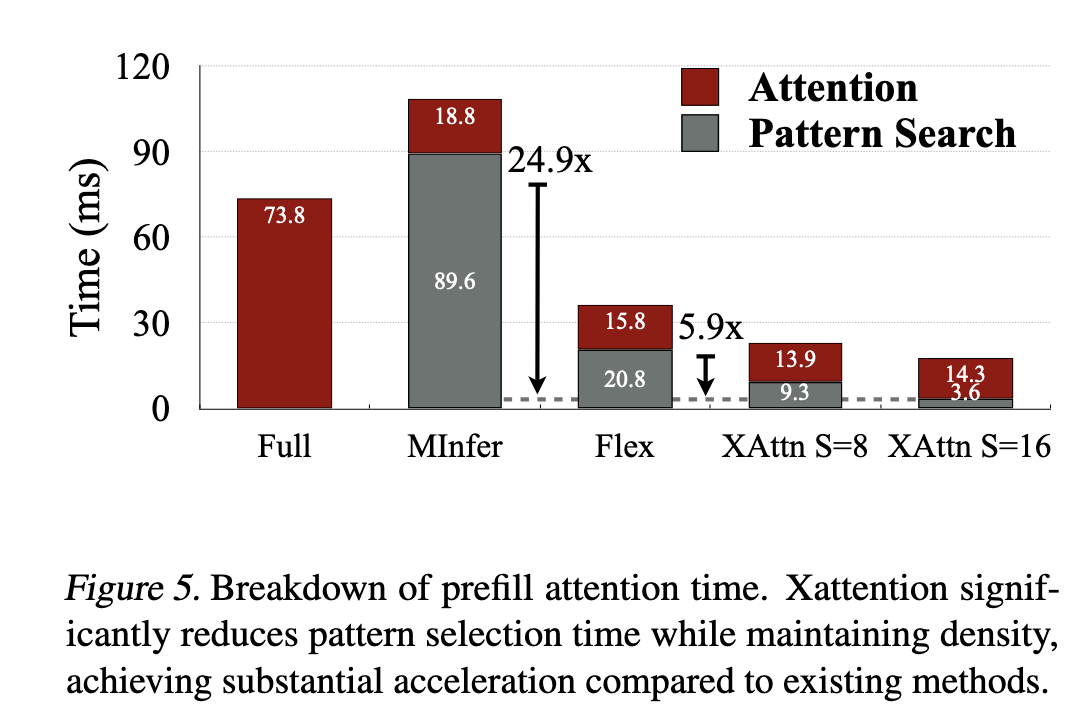
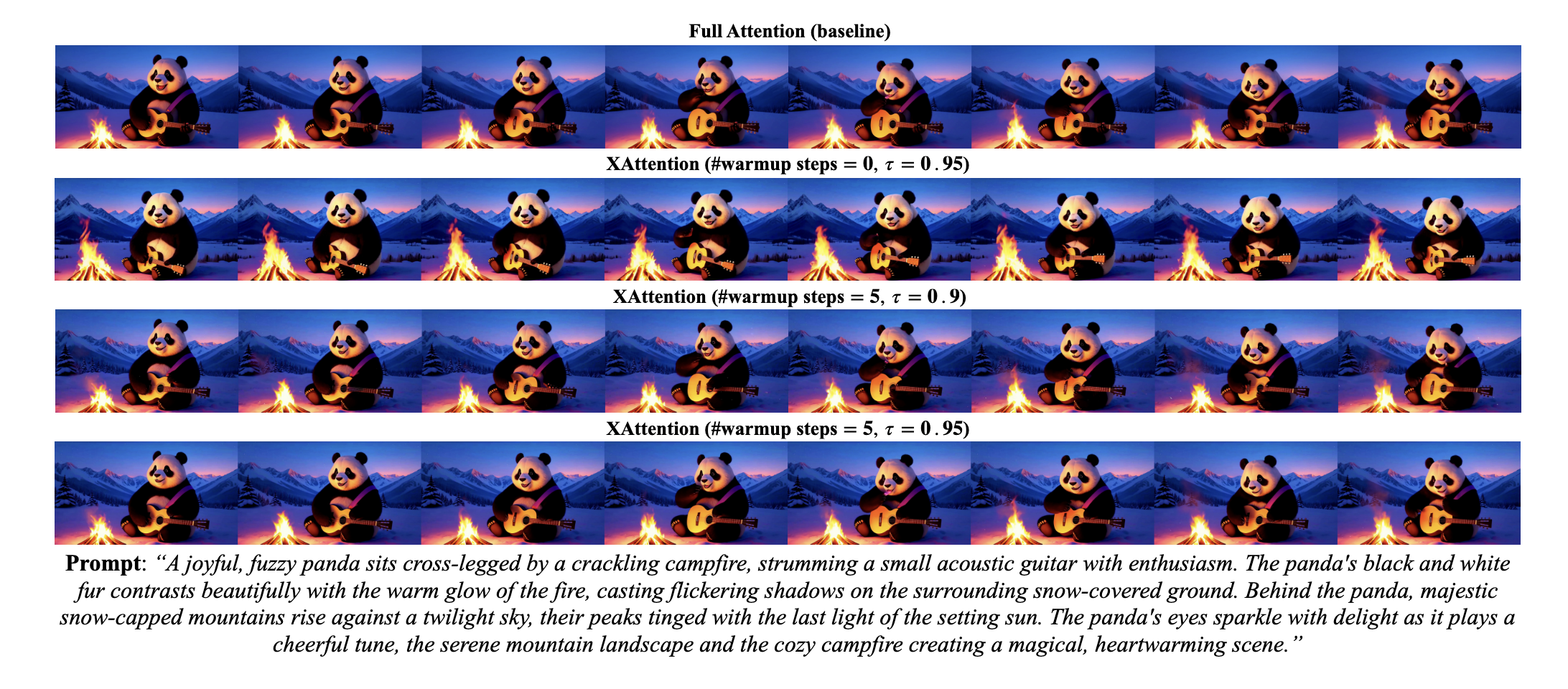
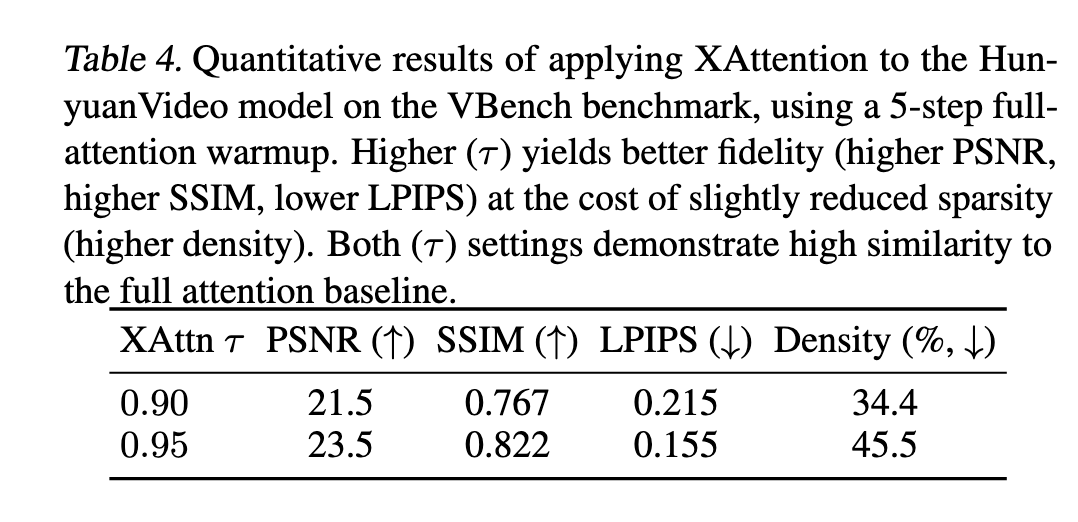
As the XAttention is focus on prefill stage of the Transformer, it can be applied to any Transformer-based models. We only show the results on video generation task using HunyuanVideo here, but the authors also show the results on other tasks like NLP using Llama-3.18B-Instruc and video understanding using Qwen2-VL-7B-Instruct. Authors choose 946 GPT-augmented text prompts from VBench for video generation task, and use full attention as the baseline as the above mentioned methods are all applied to casual attention.
Authors found that applying XAttention from the very beginning of the denoising process in the HunyuanVideo model led to slight layout shifts, that they decided to introduce a 5-step “warmup” stage as research shows early denoising steps are critical for determining content layout. The reults shows more than 50% sparsity can be achieved after applying XAttention, however they didn’t provide the speedup numbers directly.
ConceptAttention: Diffusion Transformers Learn Highly Interpretable Features
Problem
The understanding of the internal mechanisms of diffusion models is limited, and the decision-making process of diffusion models is not interpretable. The rapid advancement and enhanced capabilities of DiT-based models highlight the critical importance of methods that improve their interpretability, transparency, and safety.
Proposed Method
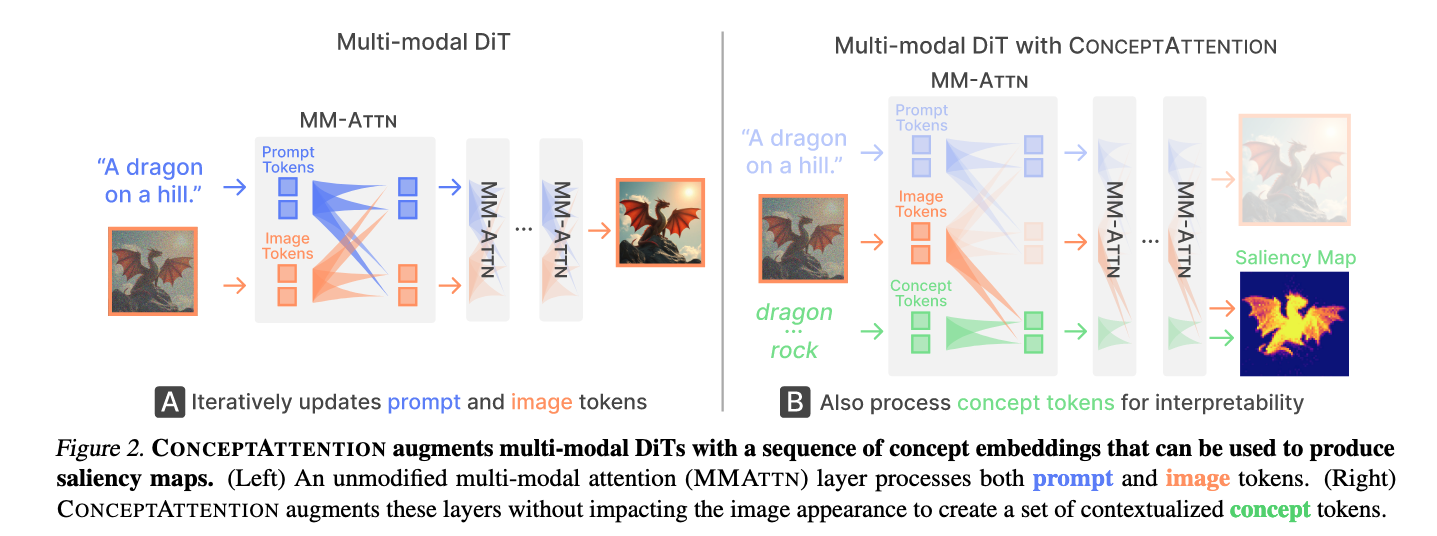
ConceptAttention utilize the multi-modal attention layers (MMATTN) in DiT to generate high quality saliency maps that depict the location of the input textual concepts in generated images. The authors create a set of contextualized concept embeddings for textual concepts and use them alongside the original input image and text, the concept input will do cross-attention with the image and self-attention with itself cause the authors found that performing both instead of just cross-attention improves the donwstream tasks performance. The concept branch won’t affect the orignal generation process. The high level idea is shown in the following figure
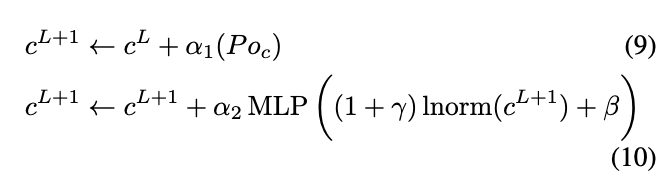
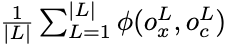
The detail algorithm is composed by the following fomulas, where subscripts ( x ) denotes image, ( p ) denotes text input prompt, ( c ) denotes concept input.






Experiments & Results
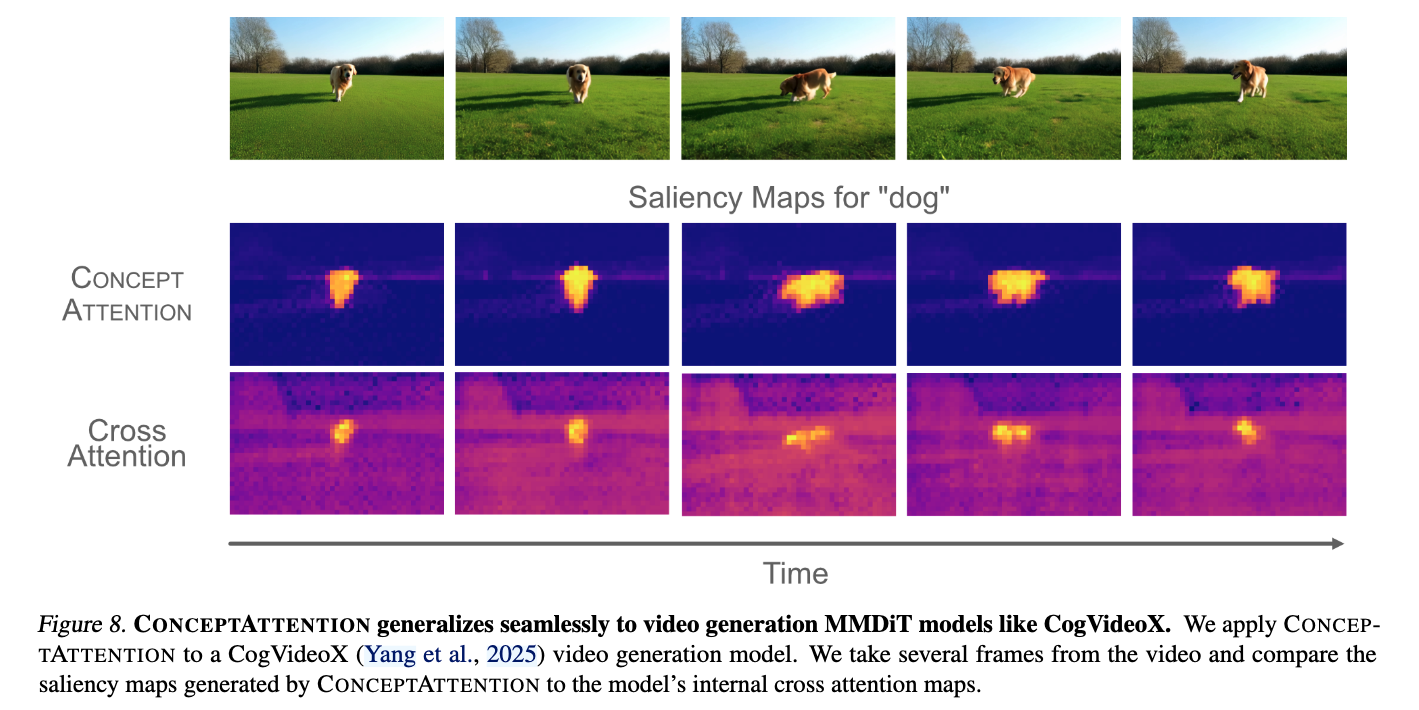
Most of the experiments are conducted on image generation task, but author shows in one case that ConceptAttention can also be applied to video generation task on CogVideoX, where they further average over the frame dimension to get the final saliency map.
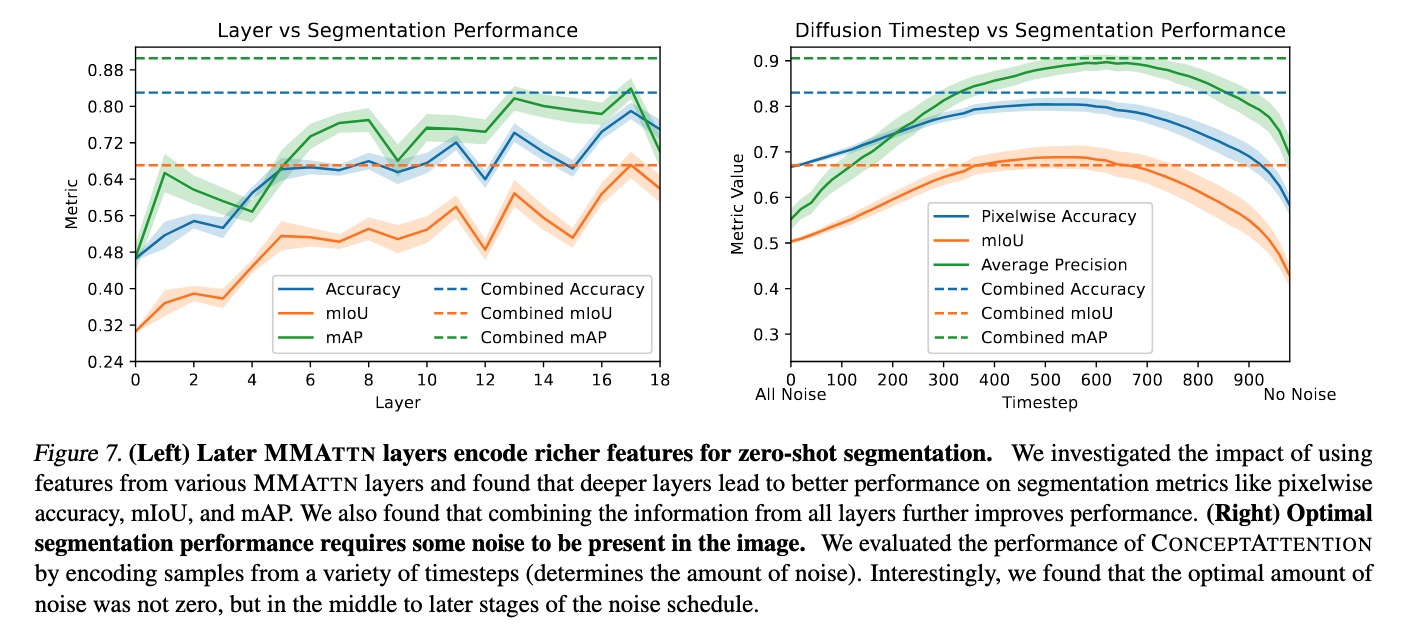
The authors also provide a inspiring ablation study on how different the output concept various between diffusion steps and DiT layers. The layers is more intuitive that the deeper layers have more refined representation that better transfer to the segmentation task. However, for the diffusion steps, it’s surprising that although the later timesteps is less noisy, the concpet output is the best at the middle of the diffusion process.
Spare VideoGen: Accelerating Video Diffusion Transformers with Spatial-Temporal Sparsity
Problem
Video geneartion is computationally expensive, and due to the quadratic computational complexity with respect to context length, in video it’s resolution and number of frames, the computational cost is even more expensive. (General video generation issue nowadays). How to leverage the nature of attention sparsity that has been shown to be effective in language models to accelerate the video generation process?
Observation & Proposed Method
The author observes two inherent sparsity attention patterns, spatial head sparsity and temporal head sparsity. The spatial head sparsity is caused by the model attention is more focused on the local region, while the temporal head sparsity is cuased by the model look at similar regions across frames. Besides, the authors also found that the text prompt and the first frame hold significant attention scores for both spatial and temporal head, so the include these tokens in both spatial and temporal head.
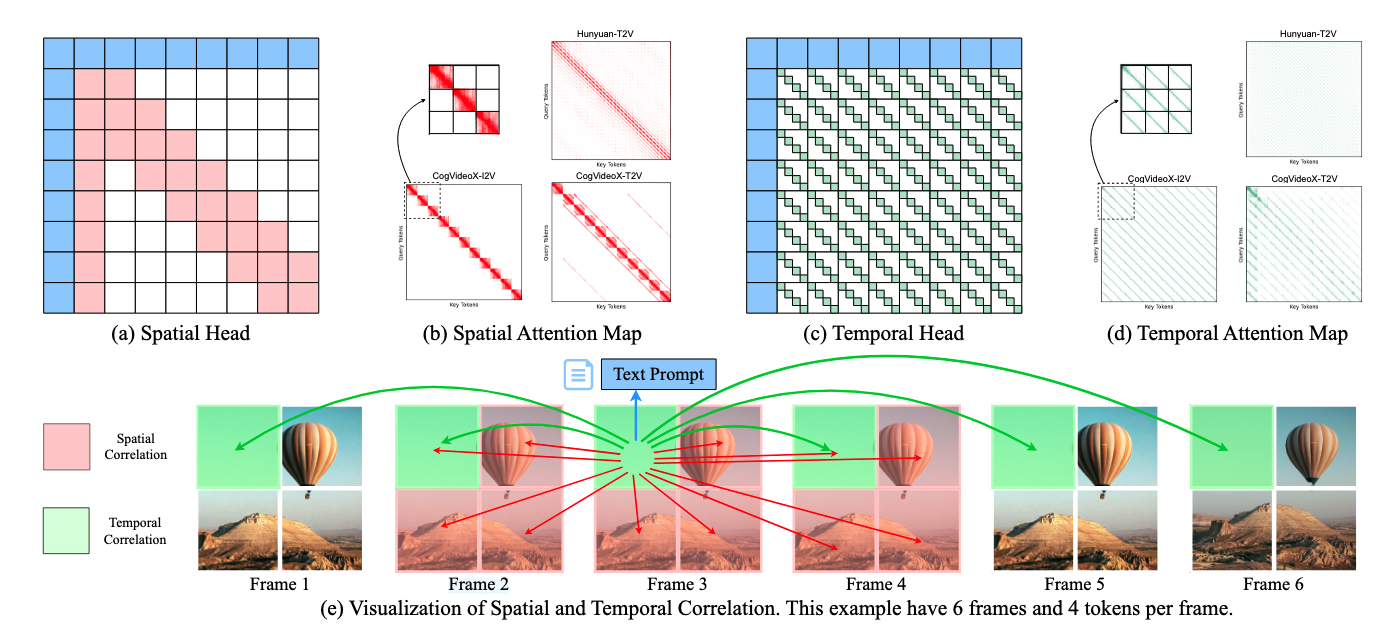
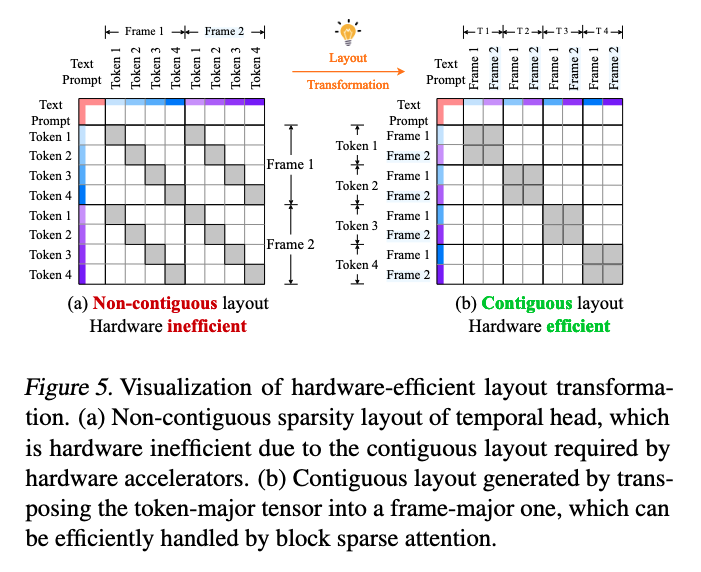
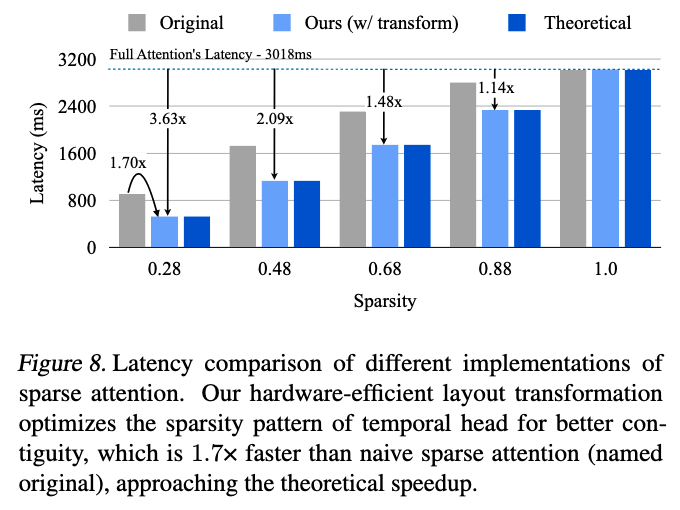
The authors further propose a method to leverage the above nature of attention sparsity called Sparse VideoGen (SVG), which is composed by two parts: (1) An online profiling strategy to identify the best sparsity pattern for each head, (2) A layout transformation, which reorders the noncontiguous sparsity pattern of temporal heads to make it hardware friendly.
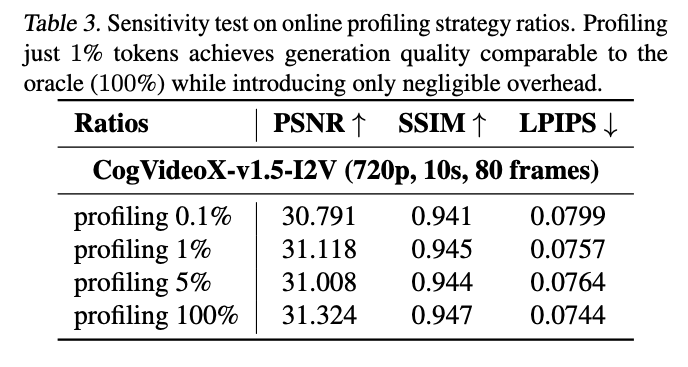
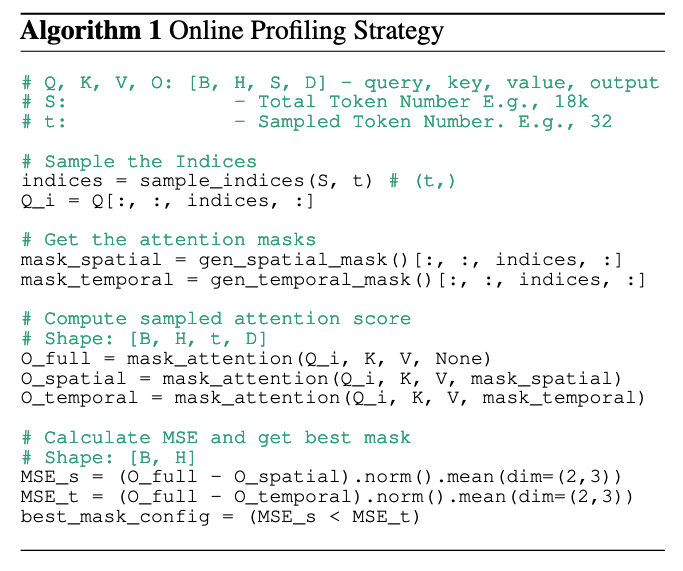
The main reason that we need online profiling here is that the sparse pattern is highly dynamic across different denoising steps and input data. The proposed online profiling strategy is first sampling a subset of input rows then calculates results with both the spatial and temporal sparsity patterns, and then select the sparsity pattern that has the lower MSE compared to full attention. Profiling just 1% tokens is enough to achieve good results compared to oracle (100%).
Because of the hardware limitation, for exmaple NVIDIA’s Tensor Core required at least 16 contiguous elements along each dimenstion to best utilize the hardware, and the temporal head exhibits a sparse layout of non-contiguous elements with a stride of ( L ) (the number of tokens per frame), SVG propose a layout transformation strategy from token major to frame major as follows:
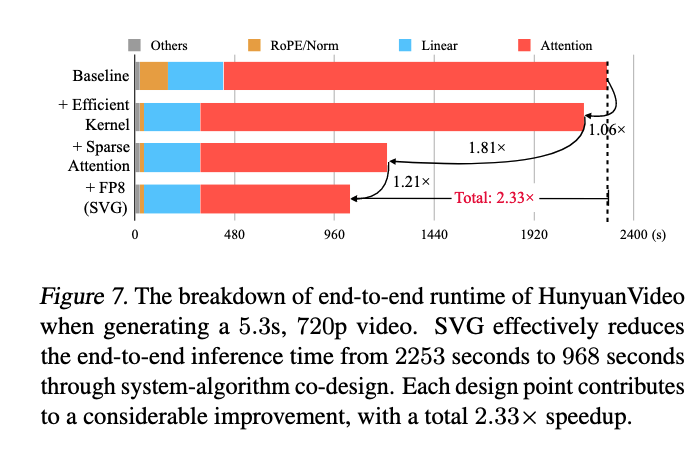
Some details: QK-norm and RoPE is customized with CUDA acode by a sub-warp reduction implementation. The online profiling strategy (fused) and the layout transformation are impelmented by Triton kernel, while the sparse attention kernel using FlashInfer. The authors also implement FP8 quantization into sparse attention.
Experiments & Results
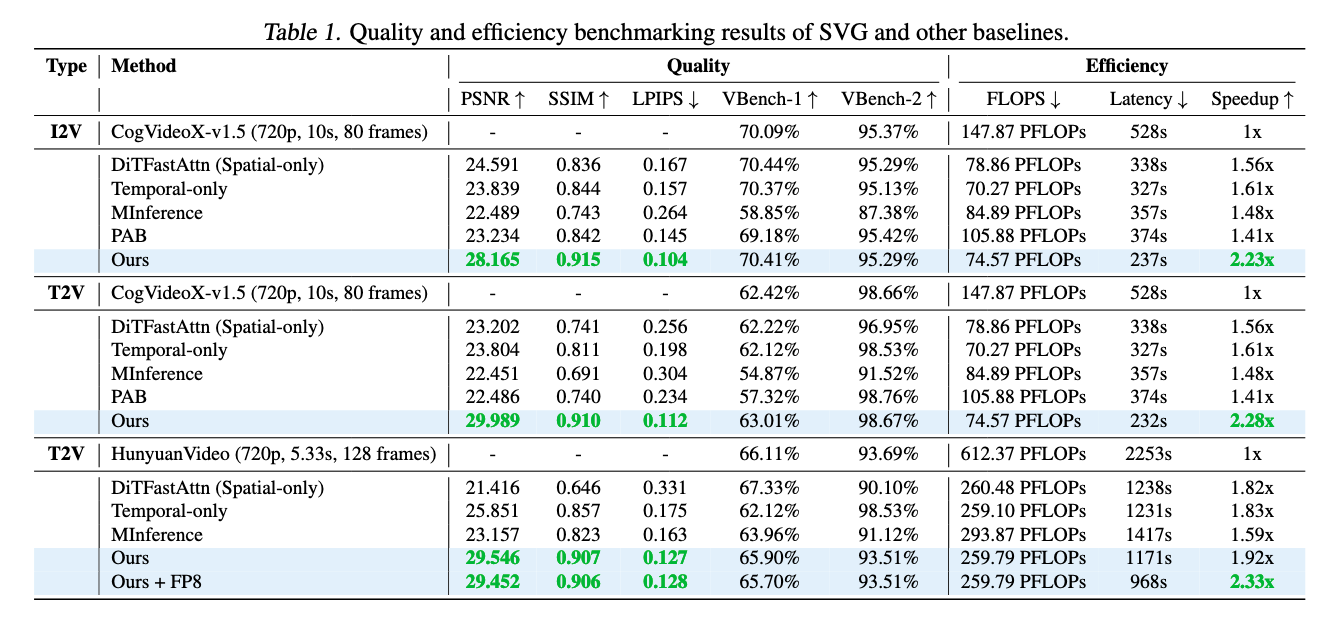
The experiments are conducted on models including CogVideoX-v1.5-I2V, CogVideoX-v1.5-T2V, and HunyuanVideo-T2V to generate 720p resolution videos. The baselines contain sparse attention methods like DiTFastAttn and MInference. Besides, the authors also compare the performance of SVG with the cache-based DiT acceleration method like PAB as baseline. They skip the first 25% of denoising steps for all baseline as they are critical to geneartion quality (But did authors skip the frist 25% of their works or not? It’s quite confusing here).
Fast Video Generation with SLIDING TILE ATTENTION
Problem
Same as the previous work, the video generation process is computationally expensive, and due to the quadratic computational complexity with respect to context length, in video it’s resolution and number of frames, the computational cost is even more expensive. Authors want to use the inherently redundancy of video data - adjacent frames are highly correlated and spatially close pixels ten to have stronger relations - to hypothesize treating every token independently in 3D attention may be unnecessarily expensive, and we can leverage the redundancy to reduce the computational cost.
Observation & Proposed Method
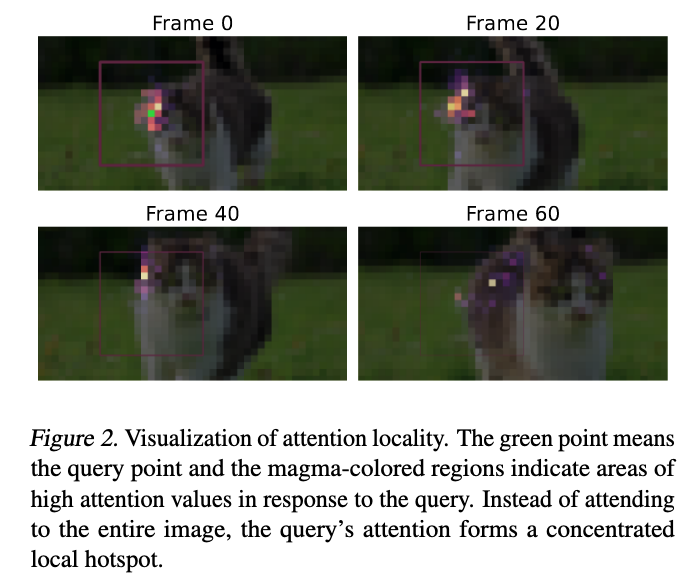
The author first observe that the query’s attention forms a concentrated local spot, mainly the near pixel in the same frame and the near position across frames. Further, they investigate the loal window’s attention scores and found that most heads show high recall (fraction of attention scores concentrated within a local window) and low std across different input prompts.
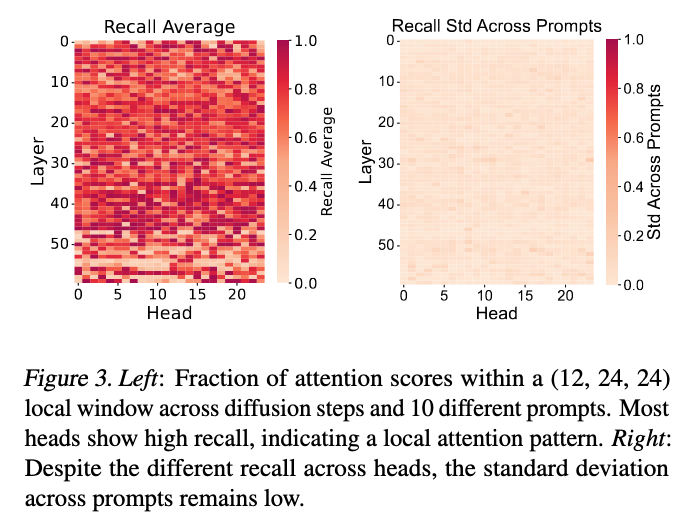
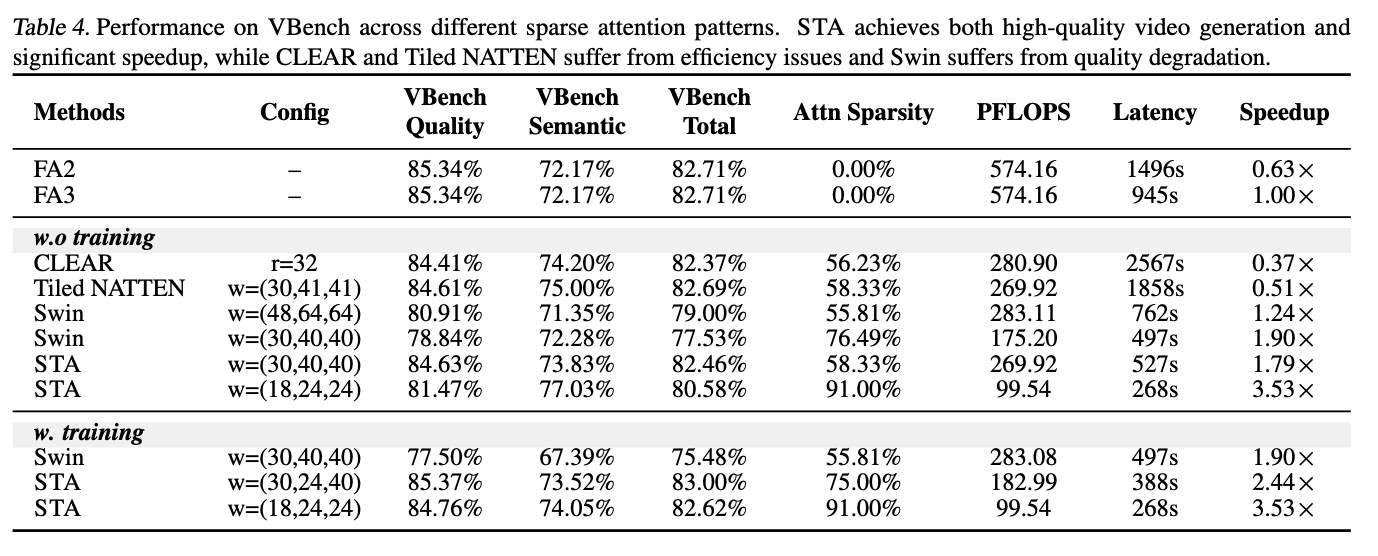
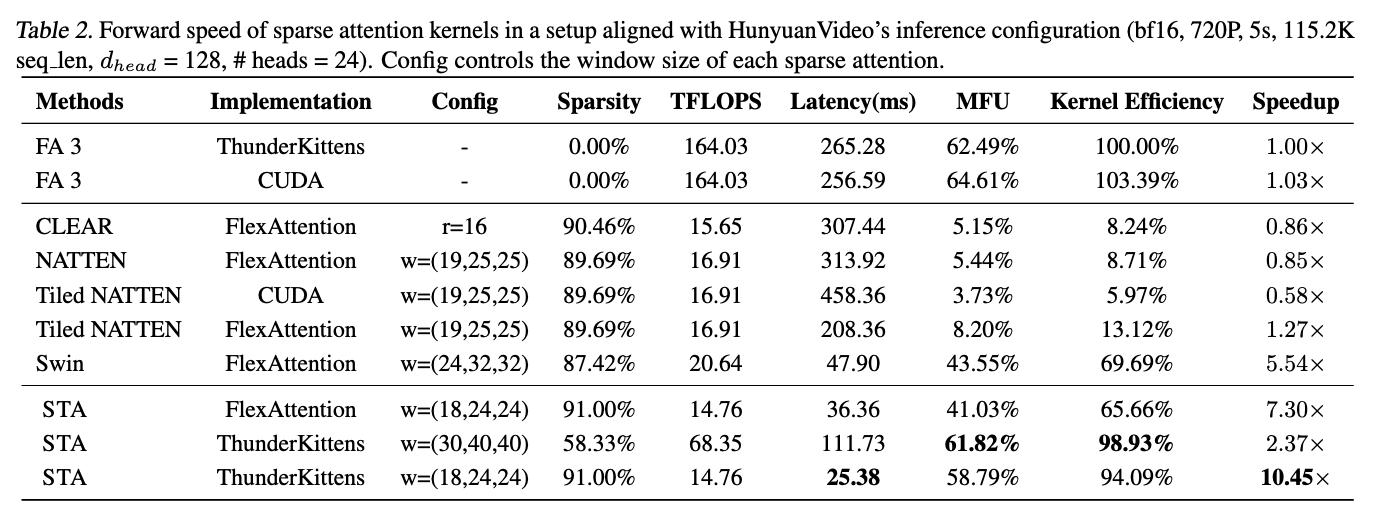
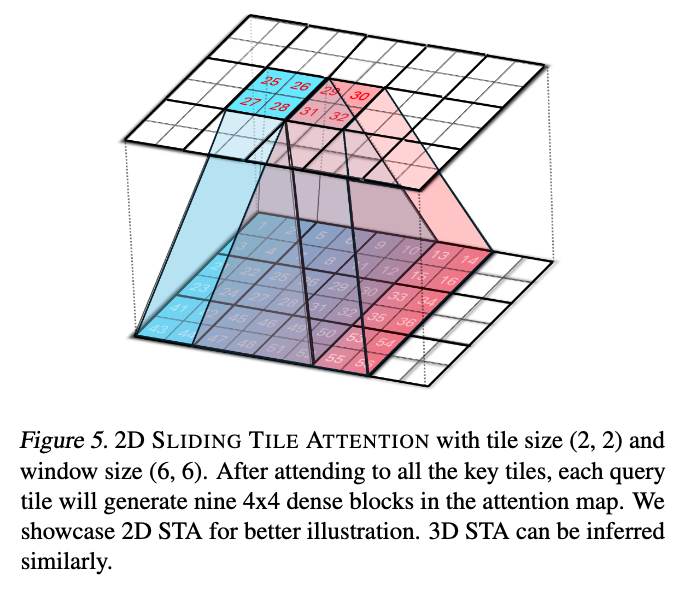
Building on the observation, sliding window attention (SWA) is an ideal candidate to reduce the computational cost. However, existing 2D or 3D SWA implementations are inefficiency due to high overhead from creating a highly irregular attention mask for each window which comes from each query attends to a distinct set of keys, resulting in a zigzag pattern in the attention map and form a lot of mixed blocks. The authors further revisit this sliding windown mechanism and propose a new method called Sliding Tile Attention (STA) to reduce the overhead. STA organizes queries and keys into tiles, all queried in the same tile attent ot the same set of keys whithin their common local window. By setting the tile areq equal to the block size implement by FlashAttention, we can eliminate the mixed blocks and improving computational efficiency.
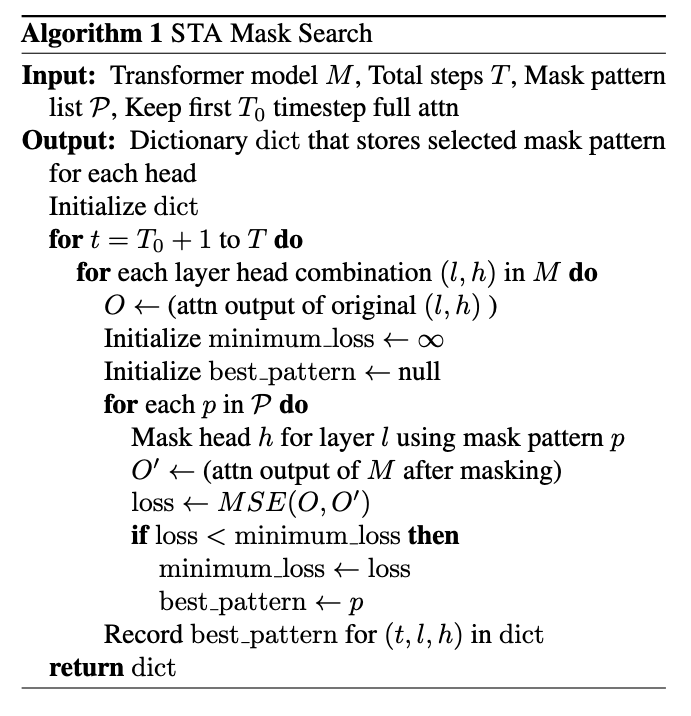
Next, the authors propose an algorithm to search for the optimal window size for each head by averaging the mask-search loss across just 16 prompts using predefined pattern list. They kept full attention for the first ( T_0 ) steps and then switch to STA for the rest of the denoising process. Besides, the authors also propose a learning method by fixing the window size and fine-tuning the model by attention distillation loss between STA and original full attention + finaly lyaer alignment loss + the data loss following the flow matching loss.




Experiments & Results